
Scaling
These episodes are about turning a working product into a company with hundreds of employees, many locations or millions in revenue, and about what goes wrong along the way. Oliver Merkel (Flink) opens almost 100 hubs in the first year, Yilmaz Köknar (Superchat) builds to 20 million ARR over six years without any press, and Jenni Baum-Minkus (gitti) grows from zero to seven and a half million euros in three years before having to cut back to the core.
The guests agree on the order of things: Oliver Merkel advises mastering your home market before expanding, and Sarah Bechstein (Formel Skin) calls the expansion to Brazil a mistake in hindsight because the product was copied one to one. On pace, opinions differ. Marius Meiners (Peec AI) posts his ARR numbers publicly to attract talent and closes his Series A in seven days. Yilmaz Köknar avoided stages and podcasts and called customers instead. Jenni Baum-Minkus says she would now look more closely at when to raise which money.
These episodes are useful if your product works and you are asking how to multiply sales, team and locations without losing your positioning or your cash. You get concrete numbers on ad spend, hubs, burn and close rates instead of generic growth advice.
Start with these episodes

Jenni Baum-Minkus shows how growing from zero to 7.5 million euros diluted the positioning and why she took gitti back to its core.

Oliver Merkel explains the Flink playbook of almost 100 hubs in year one, three unfair advantages and two cultures for HQ and field.

Sarah Bechstein describes how Formel Skin failed in Brazil after a Series A of more than 30 million and still became profitable.

Yilmaz Köknar delivers a three-stage go-to-market playbook: the first 100 customers, 100 to 1,000, and then a pure people game.

Carolin Stüdemann and Micha Fritz show how Viva con Agua organises 10,000 to 15,000 volunteers and plans to scale its social businesses internationally.
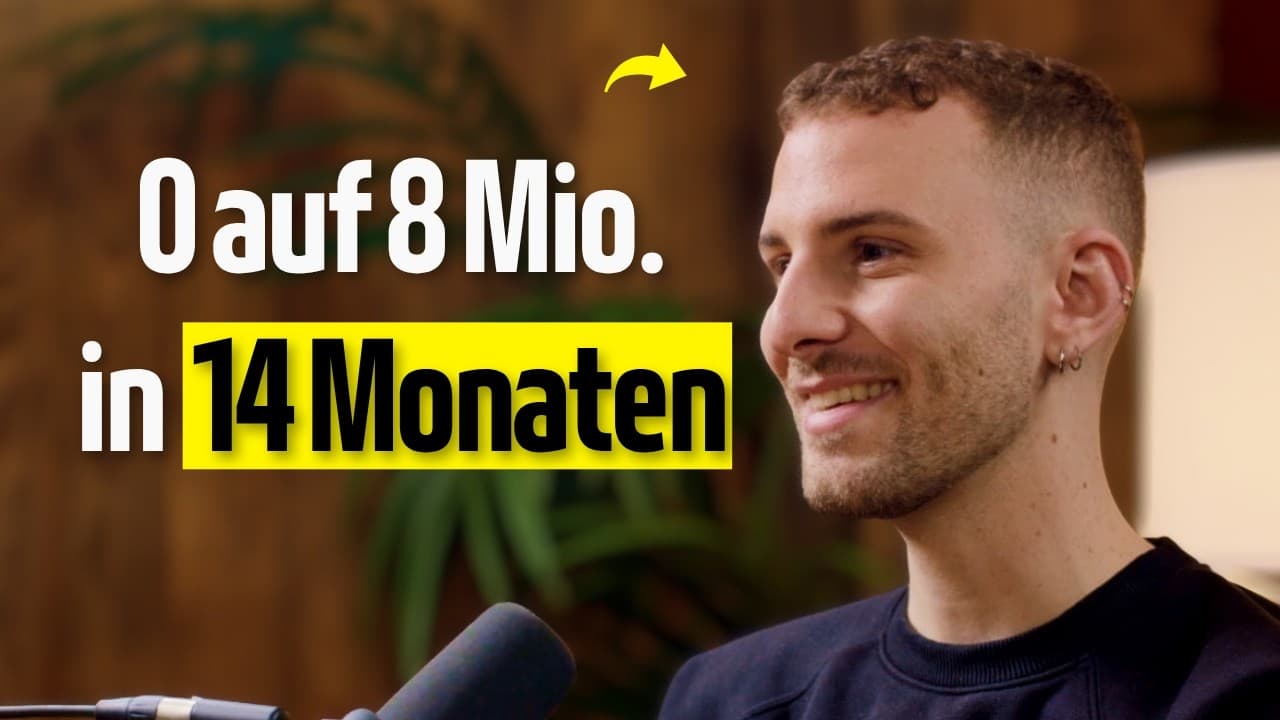
Marius Meiners took Peec AI to 8 million ARR and from 3 to 55 people in 14 months and names his biggest hiring mistakes.
What you take away from the episodes
- 1
Master your home market first
At Flink, Oliver Merkel resisted the urge to conquer the world while Getir was in twelve countries and Gorillas in ten. Copying an imperfect model into every city multiplies the mistake.
from: The billion-dollar offer and his exit as CEO - 2
A sharp positioning cannot be stretched
To customers, gitti was healthy nail polish, not a beauty brand. Jenni Baum-Minkus says lipstick, make-up and skincare brought new labs and enormous complexity, and the cost per new customer exploded.
from: A TV record, millions in funding & the comeback - 3
Good enough is enough to go tenfold
For two years Superchat's ad spend stayed frozen at 50,000 euros a month because Yilmaz Köknar feared the process would break. Today Superchat spends around half a million a month.
from: 20 million in revenue with WhatsApp - 4
Don't export your product one to one
After its Series A, Formel Skin went to Brazil and copied the product one to one. Sarah Bechstein calls that a mistake in hindsight and says Formel Skin could have scaled further in Germany.
from: How Formel Skin became profitable despite the crisis and is bringing GLP-1 to Germany - 5
Hire a founding recruiter right after product-market fit
Marius Meiners handled recruiting at Peec AI himself for too long. After product-market fit, headcount needs grow so fast that you need a founding recruiter immediately, and he would also have built sales leadership and customer success earlier.
from: From zero to a 100M+ valuation in 14 months - 6
Find a niche in the big market first
Patrick Andrae started HomeToGo in 2014 as a metasearch for holiday homes because hotels and flights already had one. From that niche came price comparison, direct booking, payments and the B2B business.
from: The future of travel, the AI bet and life as a listed company - 7
Ideas at HQ, precision in the field
At Flink's headquarters, says Oliver Merkel, only the strength of an idea counts, with as few rules as possible. In the 150 hubs the opposite applies: shift plans and routes are set centrally so that 100 hub managers don't produce a bell curve of quality.
from: The billion-dollar offer and his exit as CEO
Quotes from the episodes
„Aber irgendwo hinzugehen und zu sagen, das was anscheinend mein Lebenspurpose ist, zu verbessern, ist Nagellack, war lange Zeit super, super schwierig.““But going somewhere and saying that what is apparently my life's purpose to improve is nail polish was really, really hard for a long time.”
„Ich habe mal gelernt in meinem Leben, if people throw money at you, you take it.““One thing I've learned in life: if people throw money at you, you take it.”
„Was wir schon gesehen haben, ist ja, dass die Community total wichtig ist. Also es kommt eigentlich überhaupt nicht an auf die Followerzahl.““What we did see is that the community is hugely important. The follower count really doesn't matter at all.”
„Wir hatten kein Pricing, keine Pakete, gar nichts. … Nur Google Maps und ein Telefon.““We had no pricing, no packages, nothing. Just Google Maps and a phone.”
All 27 episodes on scaling
FAQ
When should a startup expand internationally?
According to Oliver Merkel, only once you master your home market: Flink is still only in Germany and the Netherlands. Sarah Bechstein says Formel Skin's expansion to Brazil was a mistake because the product was copied one to one and success would have needed far more money. At gitti, too, European expansion didn't take off, says Jenni Baum-Minkus, because the German playbook didn't work abroad.
How do you scale sales from 100 to 1,000 customers?
Yilmaz Köknar describes three stages: Superchat's first 100 customers came by phone with 100 to 150 calls a day. From 100 to 1,000 it was Meta lead ads under 15 euros per lead, a 45-minute demo with a 30-day money-back guarantee and a close rate of around 30 percent. Beyond 1,000 customers, says Yilmaz, it becomes a pure people game of hiring, onboarding and incentives.
What mistakes do founders make when growing fast?
Marius Meiners says he handled recruiting at Peec AI himself for too long and built sales leadership and customer success too late. Jenni Baum-Minkus describes how the big bets funded with around ten million euros diluted gitti's positioning and made the cost per new customer explode. According to Sarah Bechstein, Formel Skin's burn peaked at 800,000 a month before layoffs followed in 2022.
How fast can a startup grow?
According to Marius Meiners, Peec AI reached 8 million ARR in 14 months and grew from 3 to 55 people in a year. Oliver Merkel says Flink made 80 million in revenue in its first year and opened almost 100 hubs, at peak ten a week. Jenni Baum-Minkus grew gitti from zero to seven and a half million euros in three years, but ended up in a clinic with burnout.