
AI
These episodes are not about AI as a buzzword but about what founders actually build, sell and change with it. Jonas Andrulis explains why Aleph Alpha builds sovereign, explainable AI for public authorities and large companies, Marius Meiners shows how Peec AI reached 8 million ARR in 14 months, and Paul Aierle and Lukas Tomasek describe building KlausurBuddy with Claude Code at 14.
Many guests agree that the technology alone is no advantage: Tim Schumacher thinks products have become even more interchangeable in the age of AI, Paul and Lukas set themselves apart from ChatGPT through curricula and the student's own material, and Sebastian Schuon would rather sell the service than the software with Schub. They disagree on AI roll-ups: Philipp Klöckner does not believe in buying mid-sized companies and overhauling them with AI, because he sees a culture problem, not a technology problem. Sebastian Schuon did exactly that with a billing office and is automating its processes with agents. Christoph Zöller is bullish on AI in recruiting processes but sceptical of AI recruiters that promise a marketplace.
The episodes are useful if you are building an AI product and want to know where demand emerges, if you have to decide where to use AI in your own company, or if you want to understand how visibility in ChatGPT, Gemini and Claude is measured.
Start with these episodes
Jonas Andrulis explains what Aleph Alpha really builds: sovereign, explainable AI for public authorities and large companies rather than a German ChatGPT.
Pauline Schmiechen and Ana Lingus discuss AI chatters and digital twins of creators, and where a real person has to remain for fans.
Marius Meiners gives a GEO masterclass on how brands show up in the answers of ChatGPT, Gemini and Claude, and how Peec AI reached 8 million ARR.
Paul Aierle and Lukas Tomasek built an AI app at 14 that writes exams based on the curriculum, using Claude Code, Supabase and the Claude API.
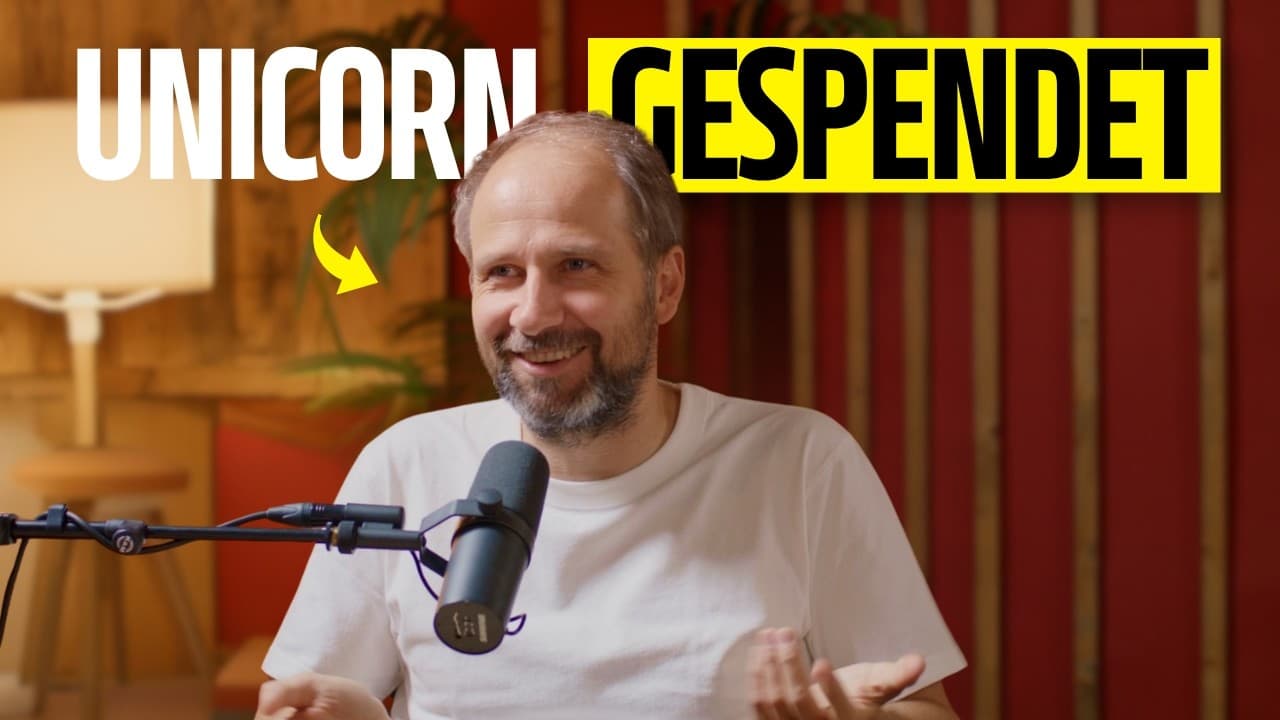
Christian Kroll is turning Ecosia from a search engine into an AI app, largely running on Mistral, and explains how a small team competes with Google.
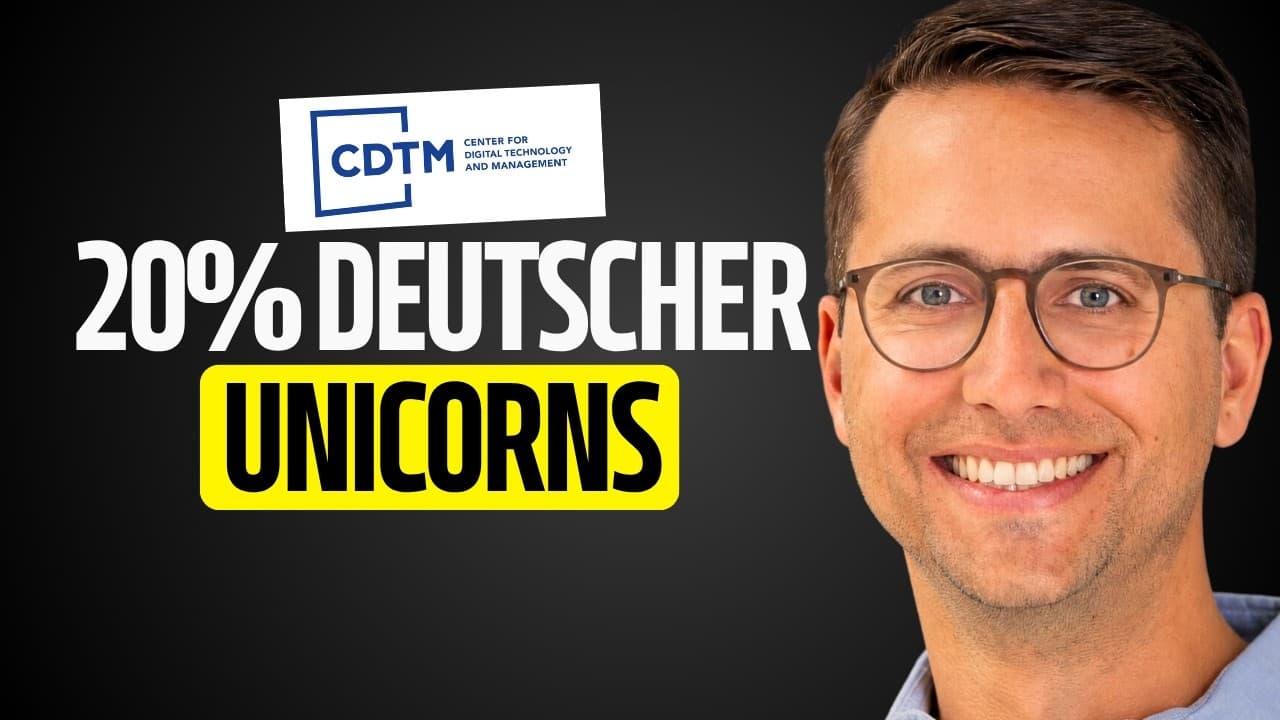
With Schub, Sebastian Schuon bought a billing office and is automating its processes with agents, because in his view AI sells services, not software.
What you take away from the episodes
- 1
Be sovereign where your knowledge matters
Jonas Andrulis suggests asking where your company's knowledge work will contribute most to your positioning in three years. That is exactly where you should not depend on a black box in someone else's cloud, and it is probably not the customer support chat.
from: What does Aleph Alpha actually do? - 2
Responsibility needs explainable AI
Anyone who wants to take responsibility for an AI result must, according to Jonas Andrulis, be able to trace which learned pattern produced it. At the Federal Employment Agency, people's lives are at stake, so saying the chatbot simply said no is not enough.
from: What does Aleph Alpha actually do? - 3
GEO starts with questions and ends with sources
Marius Meiners recommends first understanding which questions are really asked in your field, then analysing which sources ChatGPT, Gemini and Claude draw their answers from. That is where you need to be present through digital PR and your own content; a click from a ChatGPT answer sits deep in the funnel and is worth more than a classic search click.
from: From zero to a 100M+ valuation in 14 months - 4
Differentiate from ChatGPT through context
ChatGPT can generate exams too, say Paul Aierle and Lukas Tomasek. KlausurBuddy therefore builds in the curricula with their operators and competence levels and lets everyone upload their own material, which makes the exam personal.
from: 10,000 euros at 14 - 5
Win with brains instead of capital
Christian Kroll cannot spend as much on Ecosia as the US AI labs, so he deliberately says no to deep research and video generation. Instead he relies on lean, efficient models, largely on Mistral, and on his principle of being faster than by the book.
from: Giving up hundreds of millions, 250 million trees & the AI fight against Google - 6
Sell the service, not the software
At Alasco, the biggest hurdle according to Sebastian Schuon was customer adoption. If you deliver the service yourself, you can do parts of it with people and parts with AI, you rise automatically as the models improve, and you meet a budget line that already exists at the customer.
from: Behind the scenes of Germany's unicorn factory - 7
MCP servers are the new app store
Tim Schumacher calls the idea that AI has killed SaaS nonsense: Lovable and the like are SaaS themselves. Products such as ScraperAPI or Rewardful win because Lovable and Claude connect to them automatically, so founders should plug into the AI world via MCP servers and build a moat from data, network effects, community or brand.
from: The invisible empire: 300M users, 100M ARR and a 300M climate fund
Quotes from the episodes
„Also, Souveränität bedeutet bei uns auch Wahlfreiheit für Silicon.““For us, sovereignty also means freedom of choice in silicon.”
„Ich glaube, OnlyFans war sehr, sehr wichtig für unsere Industrie, weil OnlyFans hat den Creatern die Power zurückgegeben.““I think OnlyFans was hugely important for our industry, because OnlyFans gave the power back to the creators.”
„Du musst einfach alle Brücken abreißen mäßig und einfach sagen, hey, ich geh all in auf dieses Thema und auf diese Idee und vertraue einfach in mich selber.““You simply have to burn all the bridges and say: I'm going all in on this topic and this idea, and I just trust myself.”
„Beim ersten Mal wurden wir richtig rasiert. Das müssen wir vielleicht noch sagen. Weil beim ersten Mal, da hatten wir so einen Pitch, wo viel zu viel drin war.““The first time, we got properly roasted. We should probably mention that. Because the first time, our pitch had way too much in it.”
All 15 episodes on ai
FAQ
What does Aleph Alpha do, and is it the German ChatGPT?
No, says Jonas Andrulis, that is one of the big misunderstandings. According to Andrulis, Aleph Alpha builds the sovereign foundation for the AI transformation of companies, governments and security agencies, with a full software stack of human-machine collaboration, evaluation, LLMs and ready-made applications that can also run air-gapped on the customer's own hardware. The company deliberately stayed out of the race for the biggest LLM; its customers include the Federal Employment Agency.
How do I make my brand visible in ChatGPT?
According to Marius Meiners of Peec AI, you first have to understand which questions are really being asked in your field, then check how you perform on that prompt set and which sources the models cite, such as TikTok, YouTube, studies or competitors' articles. That is exactly where you need to be present through digital PR and your own content. Among B2B SaaS customers, Meiners says up to 20 percent of conversions already come through this channel, and Peec itself gets 15 to 20 percent of its leads from AI search.
Has AI killed SaaS?
Nonsense, says Tim Schumacher. Lovable and the like are SaaS themselves, with subscriptions and usage-based pricing, and according to Schumacher anyone rebuilding legacy code with AI gets by with two developers instead of twenty. Christian Meermann of Cherry Ventures adds that lean AI companies today reach six to 15 million ARR profitably with fewer than 20 people, but a would-be category killer will eventually be overtaken by a competitor that raises 50 million.
Is AI taking developers' jobs?
Christoph Zöller of Instaffo does not see it at the moment. Demand for developers is falling, but according to Zöller because of the economy and the many hires made during the Covid and tech peak. He rather expects tools like Cursor to raise the bar for products and, in the medium term, possibly lead to more developers. Christian Meermann says CEOs today need far more technical understanding than five or ten years ago.