

Who this is
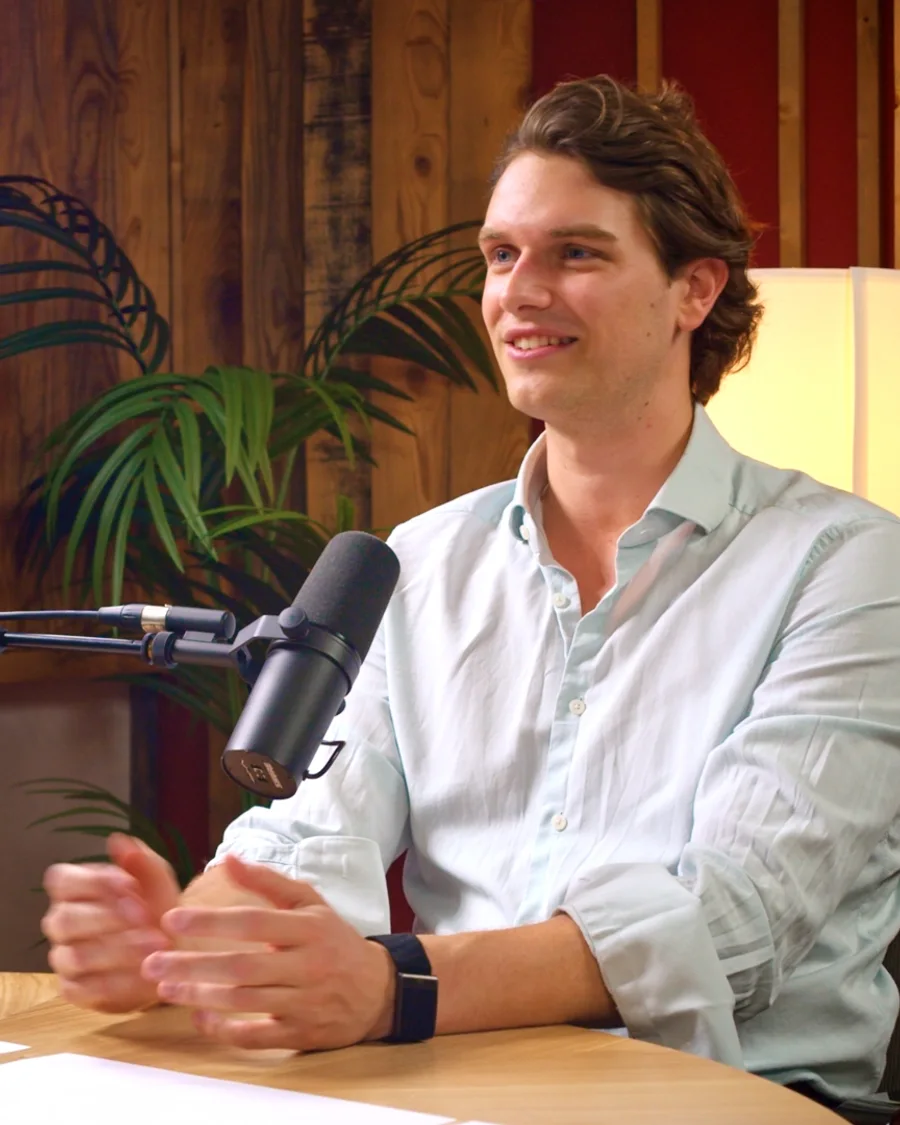
Niklas Schwab (27) started posting business memes anonymously on Instagram as a student under the name Hedgefonds Henning. He stayed faceless for almost four years; the big face reveal came in May 2024 at the OMR festival. Today he builds business formats for Gen Z and Gen Y aged 20 to 35 and reaches more than 500,000 people across Instagram, YouTube, a newsletter and a print magazine. Behind it are three companies with no investors: the Instagram unit run with student workers, a production company with three and a half full-time staff that produces documentaries and long-form content, among others for the public-broadcasting channel High Performer Henning at funk, and the news brand Hyper with a newsletter and a semi-annual print magazine. On the side he co-organises the Zukunftsforum Baden-Baden, a free event for 100 participants under 30.
Episodes
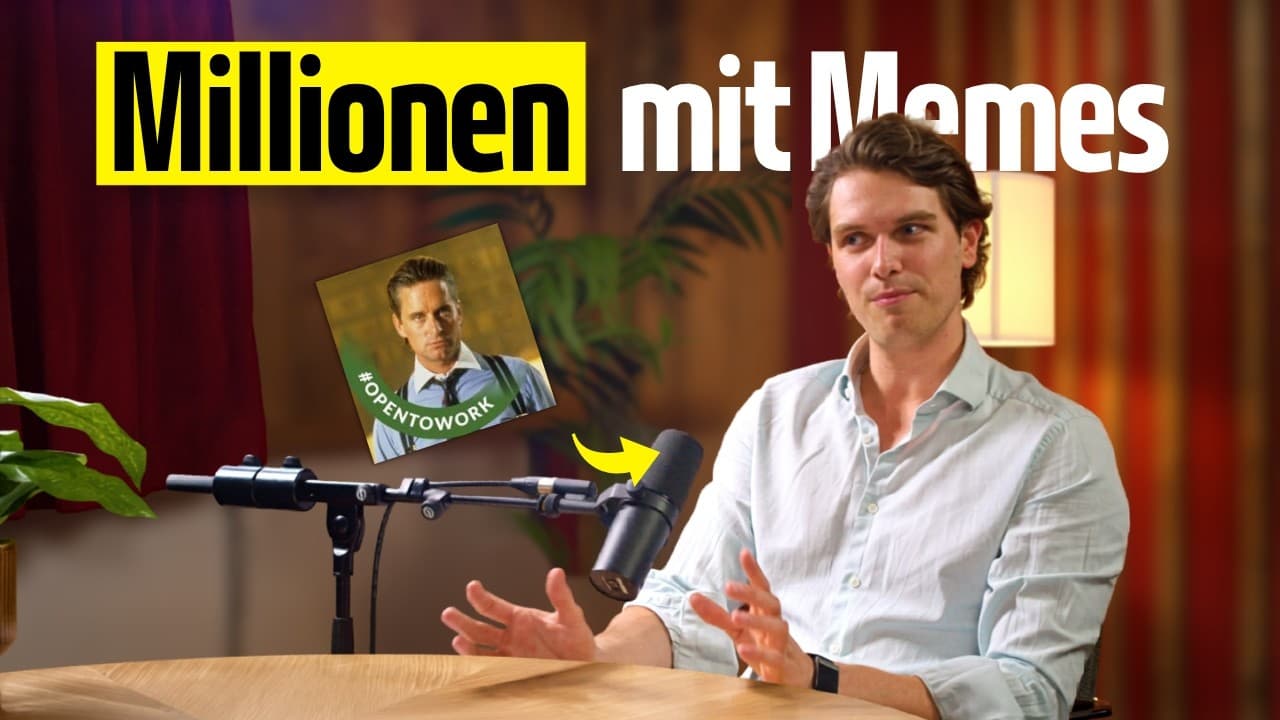
Numbers from the episode
FAQ
Who is Niklas Schwab and what is Hedgefonds Henning?
Niklas Schwab is 27 and started posting business memes anonymously on Instagram as a student under the name Hedgefonds Henning. He stayed faceless for almost four years; the reveal came in May 2024 at the OMR festival. Today he builds business formats for Gen Z and Gen Y aged 20 to 35 and, according to the episode description, reaches more than 500,000 people across Instagram, YouTube, a newsletter and a print magazine. To the episode →
How much revenue does Niklas Schwab make with Hedgefonds Henning?
In the episode Niklas says the whole group of three companies will make close to a million euros in revenue this year. The Instagram unit Hedgefonds Henning stays under 500,000 euros but generates most of the profit thanks to advertising. The production company, founded last year, is also under a million. There are no investors; everything is bootstrapped. To the episode →
Why does Hedgefonds Henning publish a print magazine?
The Hyper magazine launched in January 2025 as a year-in-review with a print run of 10,000, because there was no print magazine left for the under-35 generation and Niklas didn't want to write a book. Less than one euro of the 10-euro cover price stays with him. It still pays off because big banks have larger print budgets than social media budgets, which lets Niklas offer hybrid campaigns. The magazine now comes out twice a year, is sold through his shop and Amazon and distributed at university events and sponsored student sports events. To the episode →
What is High Performer Henning?
High Performer Henning is the YouTube channel that Niklas' production company produces for funk, a German public-broadcasting content network. The name deliberately differs from Hedgefonds Henning because no advertising is allowed on the public-broadcasting channel and the two must be kept strictly separate. It also hosted Niklas' startup show with a jury from the community, which reached 140,000 to 150,000 views. To the episode →
What does Niklas Schwab want to build in the coming years?
Niklas sees advertising only as a transition phase. To him, reach is an asset: first he builds media reach and infrastructure, then in three to five years he wants to build something of his own for this high-income audience, ideally in software. His model is Bloomberg, where according to Niklas most of the revenue comes from the technology rather than the media brand. He doesn't have a concrete idea yet and doesn't need VC funding for it. To the episode →
Quotes
„Du kannst Kreativität nicht gut systematisieren.““You can't really systematise creativity.”
„… bei Meme ist alles unter 10. 000 schlecht. Das ist meine interne Metrik.““With memes, anything under 10,000 is bad. That's my internal metric.”
„… Großbanken haben immer noch größere Print-Budgets als Social Media Budgets.““Big banks still have larger print budgets than social media budgets.”
„… das Einfachste ist immer Werbung, aber Werbung ist ehrlicherweise immer die schlechteste Monetarisierung.““The easiest thing is always advertising, but honestly, advertising is always the worst form of monetisation.”
„Also ich sehe so Reichweite auch wirklich als Asset.““I really do see reach as an asset.”