

Who this is
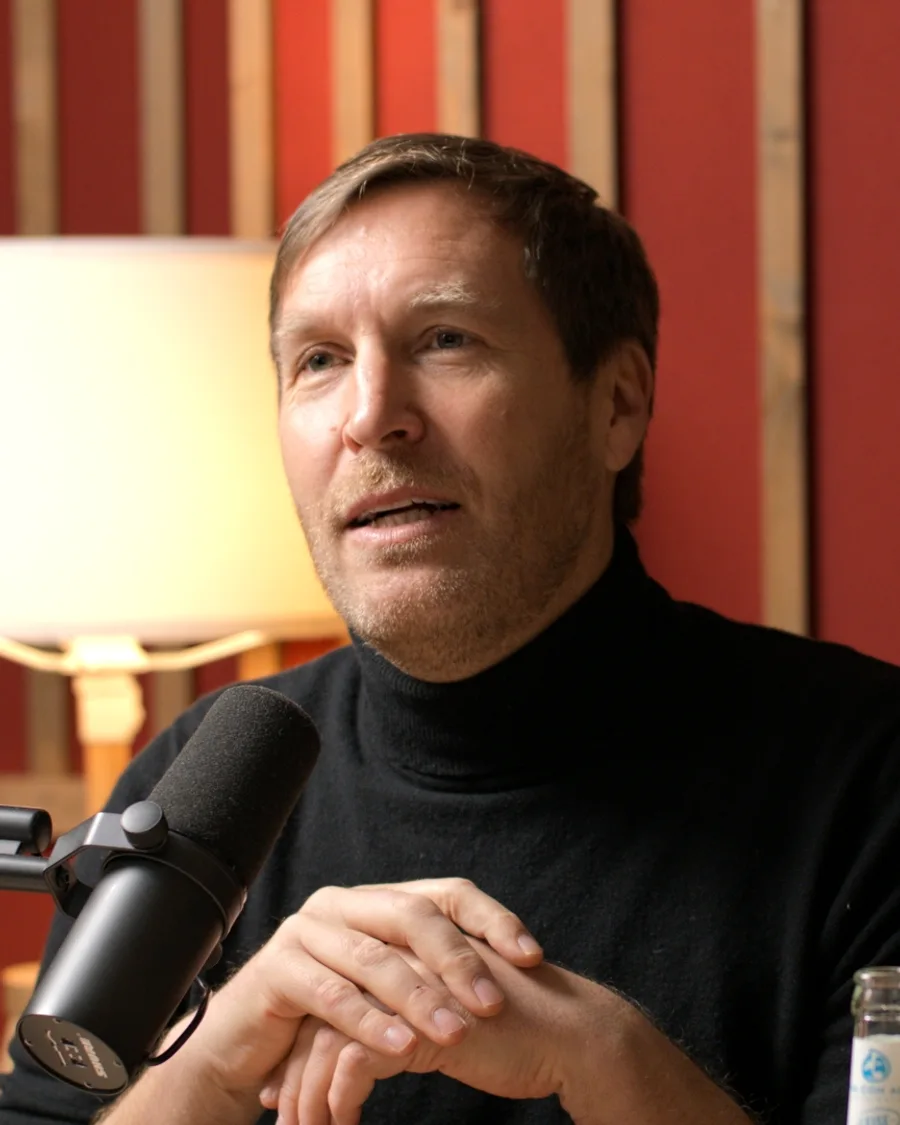
Tim Schumacher started coding as a teenager and in 2000 founded Sedo with two friends in Freiburg, today the world's largest domain marketplace. Ten years later the company was listed, had 300 employees and was sold to United Internet. Since then Tim has run several companies in parallel: in 2011 he co-founded eyeo, the company behind Adblock Plus, with Wladimir Palant and Till Faida. It has more than 300 million users and makes around 20 million in profit a year without ever having needed outside capital. He joined the search engine Ecosia as an angel and later transferred his shares into a foundation together with founder Christian Kroll. With saas.group he has been buying small, mostly bootstrapped SaaS companies for about seven years, 25 of them so far, with 100 million in ARR. In 2021 he launched World Fund, a 300 million euro climate fund, with Daria Saharova and Danijel Višević. His angel investments are bundled under TS Ventures.
Episodes
Numbers from the episode
FAQ
What is Tim Schumacher's role at Ecosia?
Ecosia is Christian Kroll's search engine, which puts 100 percent of its profits into climate action. Tim joined as an angel and describes himself as a late co-founder. Later both moved their shares into a foundation along the lines of steward ownership; on paper they still hold voting rights, but only 0.2 percent each and no right to take out profits. Ecosia makes almost 50 million in revenue, close to 20 million goes into trees and climate projects, and Telekom, DHL and government ministries use Ecosia as their default search. To the episode →
What does saas.group do and which companies does it buy?
saas.group buys small, mostly bootstrapped SaaS companies with product-led growth and 1 to 10 million in revenue, for example dev tools like Tower, online marketing and productivity tools. Tim founded it about seven years ago with his Sedo co-founder Ulrich and OMR co-founder Tobias Schlottke. So far it has bought 25 companies with a combined 100 million in ARR. Today this is financed mainly through a debt facility of up to 100 million, among others from the RAG-Stiftung and KfW, plus a small stake held by Acton Capital. To the episode →
What does saas.group pay for a SaaS company?
In the small business segment, Tim says there have been clear ranges for years: four to seven times profit or potential profit, roughly one to three times revenue. A company with 3 million in revenue and 600,000 in profit therefore lands between three and five million. Stock market multiples like 15x revenue are far from reality. Whoever sells like this, Tim says, ends up with more money than 99 percent of all VC-backed founders. To the episode →
What is World Fund?
World Fund is a climate fund Tim started in 2021 with Daria Saharova and Danijel Višević. As a first-time fund it raised 300 million from a standing start. It invests along the whole value chain in climate-positive companies, from energy and buildings to food and agriculture, always asking what decarbonises. Examples from the episode: Planet A Foods (ChoViva, chocolate made from oats), Freshflow (AI ordering for fruit and vegetables) and IQM, the portfolio's first unicorn. To the episode →
Quotes
„Also ich würde mal wagen zu behaupten, dass wir die beliebteste deutsche Consumer-App sind. Wir haben über 300 Millionen Nutzer.““I'd venture to say we are the most popular German consumer app. We have more than 300 million users.”
„… das Produkt selber ist halt sehr austauschbar. Jedes Produkt ist sehr austauschbar. Jetzt in Zeiten von AI ist es noch austauschbarer, weil wir einfach Produkte super schnell entwickeln können.““The product itself is very interchangeable. Every product is very interchangeable. In the age of AI even more so, because we can simply build products super fast.”
„Jemand anders ist danach der, der auch die endgültigen Entscheidungen trifft. Und das ist fast das Schlimmste als Gründer.““Afterwards someone else is the one who makes the final decisions. And as a founder that is almost the worst thing.”
„… du darfst nur klimapositive Produkte eigentlich an den Markt bringen, wenn du sie auch an Klimawandelleugner verkaufen kannst.““You should really only bring climate-positive products to market if you can sell them to climate change deniers too.”
„Geld hat einen extrem abnehmenden Grenznutzen. Die erste Million ist sehr lebensverändernd, vielleicht die ersten zwei, drei auch noch. Danach nimmt es sehr ab.““Money has extremely diminishing marginal utility. The first million is very life-changing, maybe the first two or three as well. After that it drops off sharply.”