

Who this is

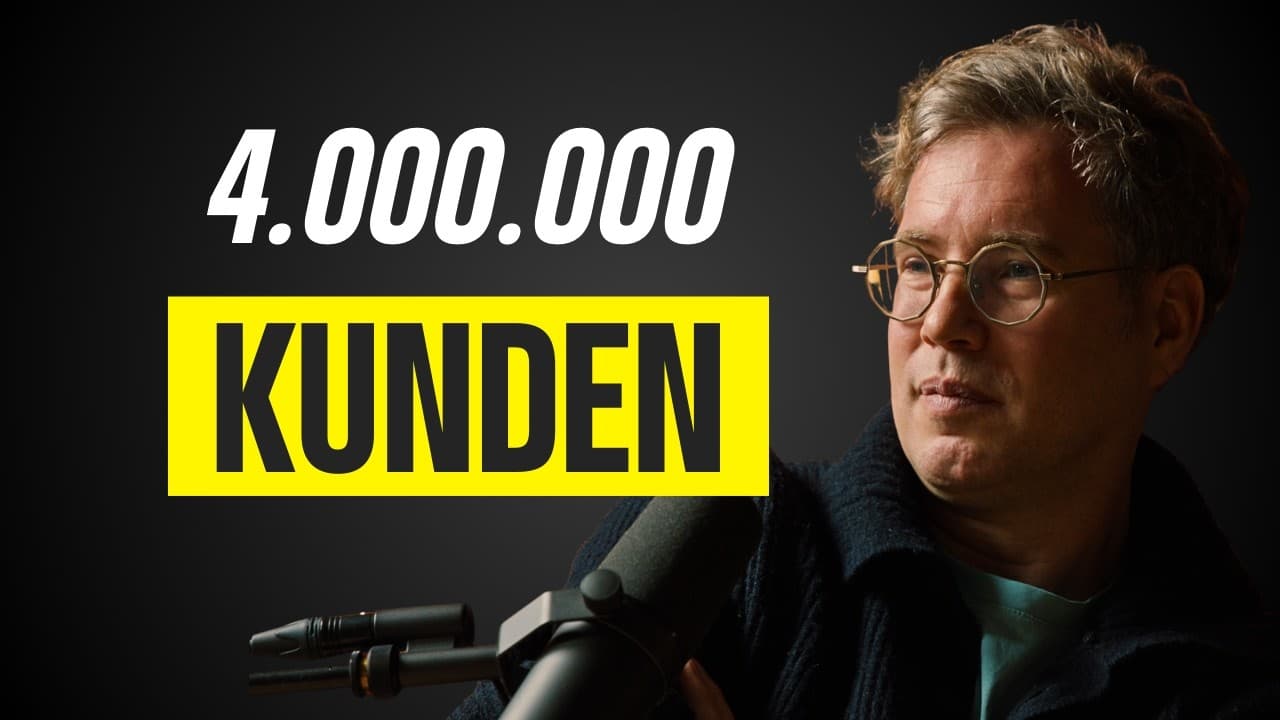
Marc-Alexander Christ co-founded SumUp in Berlin in 2012. The company started with a white card reader for small merchants and today serves more than four million merchants in 37 countries, with Mexico about to become the 38th. Before SumUp he sold to small merchants at CityDeal, and he studied business administration in Maastricht. Of the co-founders, two still run the company today. For around twelve years he has ridden with Tech Bikers, raising money for World Bicycle Relief.
Episodes
Numbers from the episode
FAQ
How does SumUp make money?
SumUp sells card readers for 30 euros and earns a fixed percentage on each card payment, 1.39 percent in Germany, with no minimum contract term. On top come account and card, point-of-sale systems, invoicing, an online store and booking. Many of these products are free and monetised through payments, while a premium tier is paid as software as a service. To the episode →
How did SumUp fund its growth?
According to Marc-Alexander Christ, SumUp raised about 30 million in Series A and B rounds in its first three or four years. After the merger with payleven, revenue covered operating costs before marketing. That made SumUp attractive to lenders, and it funded its growth from 2016 to 2022 with more than a billion in loans. To the episode →
Why did SumUp pull out of Russia?
Russia was roughly the eleventh or twelfth country and is the only one SumUp ever closed again. After about 18 months it became clear that three Russian competitors served the market better. On top of that, the oligarch behind the joint venture's partner bank disappeared, and the joint venture's leadership changed roughly every six months. To the episode →
How does SumUp win new merchants?
Direct sales was too expensive at first, so in the early years SumUp relied mainly on performance marketing through Facebook. Partnerships followed, such as with UBS in Switzerland, as did retail with more than 10,000 outlets in Europe, including MediaMarkt, Saturn and Metro. Today there is also an enterprise business and direct sales again, as long as the payback period stays under twelve months. To the episode →
What does SumUp use AI for?
SumUp uses AI for fraud detection, since it is good at recognising patterns, and in customer support. AI outbound calls book appointments for sales reps but don't sell themselves, according to Marc in countries such as Germany, the UK, France and Italy. Internally AI helps in engineering and finance, for example with accounts payable and receivable. To the episode →
Quotes
„… Payment so ein geiles Geschäft ist, dass wenn du einmal Payment gemacht hast, du … nie wieder was anderes machst.““Payments is such a great business that once you've done payments, you never do anything else again.”
„Wenn wir es nicht schaffen, praktisch vernünftige Payback-Perioden hin mitzukommen, mit neun Monaten, dann haben wir hier auch kein vernünftiges Geschäftsmodell …““If we can't get to a sensible payback period of nine months, then we don't have a sensible business model here.”
„… zu viele Kapitäne auf dem Boot machen es nicht einfacher.““Too many captains on the boat don't make it any easier.”
„Ich glaube, Empathie ist eins der großen underrated Skills, die es da draußen in der Welt gibt.““I think empathy is one of the great underrated skills out there in the world.”
„Ich glaube, das ist dann besser, ein Bein zu verlieren, als den ganzen Patienten aufzugeben.““I think it's better to lose a leg than to give up on the whole patient.”