
Who this is
Christian Underwood comes from strategy consulting and twice built a consultancy of around 30 people, both of which collapsed. He then co-founded StrategyFrame with Prof. Jürgen Weigand of WHU, where he did his MBA: a guided strategy process for mid-sized companies that combines software, an academy, AI agents and optional coaching. The two wrote the method down as a book published by Campus Verlag and host the podcast "Hoffnung ist keine Strategie" (Hope is not a strategy), which he describes as the first German-language strategy podcast. StrategyFrame is bootstrapped, fully remote and aims for 5 million euros in revenue in 2025 with a core team of eight.
Episodes
Numbers from the episode
FAQ
What is StrategyFrame?
StrategyFrame is a guided strategy process for mid-sized companies, co-founded by Christian Underwood and Prof. Jürgen Weigand of WHU. It combines software, an academy, AI agents for market intelligence, benchmarking and M&A analysis, and optional coaching. The result is a one-page strategy that is then carried forward with OKRs and project portfolio management. To the episode →
How much does StrategyFrame cost?
According to Christian, software and academy for ten users start at just under 22,000 euros a year. Optional coaching costs 35,000 euros for six months in the one-day variant, including facilitation of the workshops. Data packages come on top, such as market intelligence from 5,000 euros and market reports between 6,000 and 25,000 euros. Asked whether a typical customer pays 50,000 to 100,000 euros, Christian says most start at roughly 55 to 120. To the episode →
How big is StrategyFrame?
The core team is eight people, supported by external partners such as developers and people who edit the podcast. StrategyFrame is fully remote with no office. For 2025 Christian cites a revenue target of 5 million euros, which he says they will hit. To the episode →
Who is StrategyFrame not a good fit for?
Christian names two groups: early-stage startups without a go-to-market or product-market fit, for whom he recommends the Business Model Canvas instead, and global corporations with hundreds of thousands of employees. The sweet spot is mid-sized companies from 200 employees upward in Germany, Austria and Switzerland. To the episode →
Does StrategyFrame have investors?
No. Christian describes StrategyFrame as bootstrapped: customers fund the growth. He won't say never, for instance for a major international expansion, but there are currently no plans to bring in an investor. To the episode →
How did a Handelsblatt article change StrategyFrame?
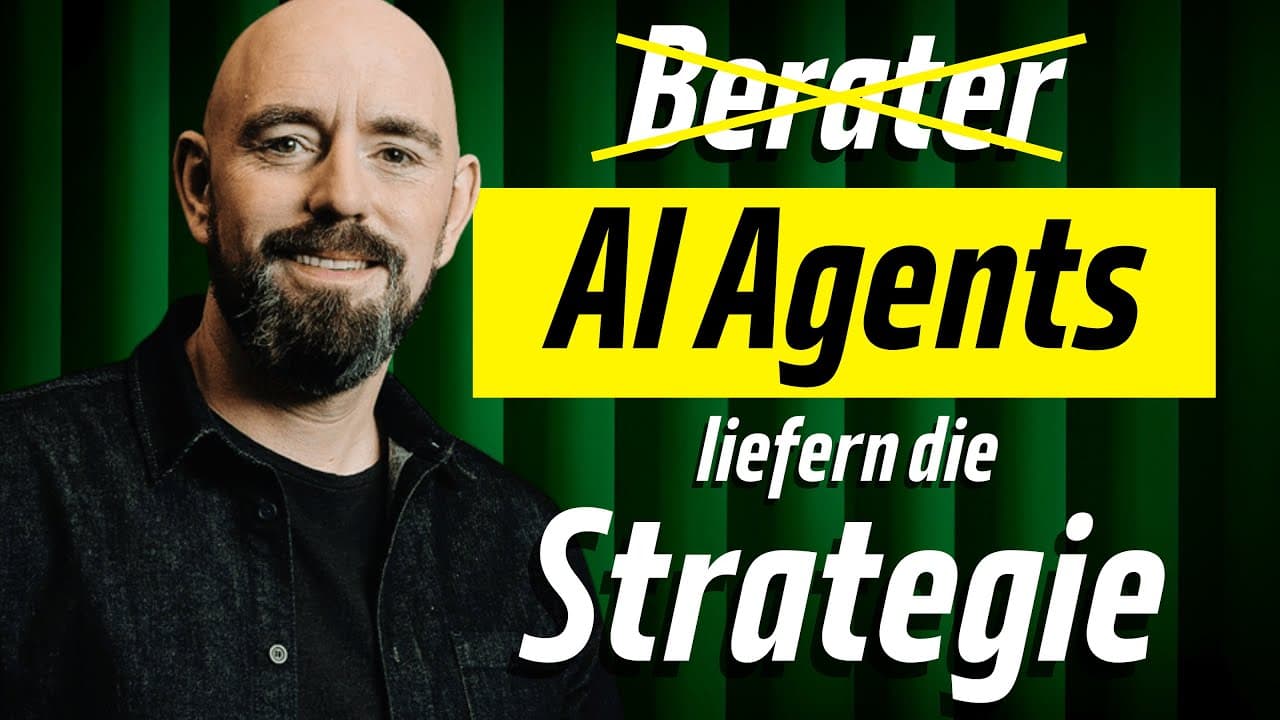
After the article reporting that the strategy firm was replacing its consultants with AI agents, Christian says 100 customers and 2,500 inquiries came in during the first week, many through private equity and holding companies. Almost every traditional consultancy called afterwards to learn from it. To the episode →
Quotes
„Strategie ist zu wissen, was man nicht tun sollte, nach Michael Porter.““Strategy is knowing what not to do, according to Michael Porter.”
„Ich konzentriere mich lieber auf zahlende Kunden.““I'd rather focus on paying customers.”
„… damit kann ich jemanden erschlagen, aber nicht überzeugen.““You can bludgeon someone with that, but you won't convince them.”
„Also, der Berater hat heute eigentlich keinen Wissensvorsprung mehr.““Consultants today don't really have a knowledge edge anymore.”
„Ja, also das Wesentliche ist Vertrauen. Also wenn es um Strategie geht, geht es um Vertrauen.““What really matters is trust. When it comes to strategy, it's all about trust.”