

Who this is

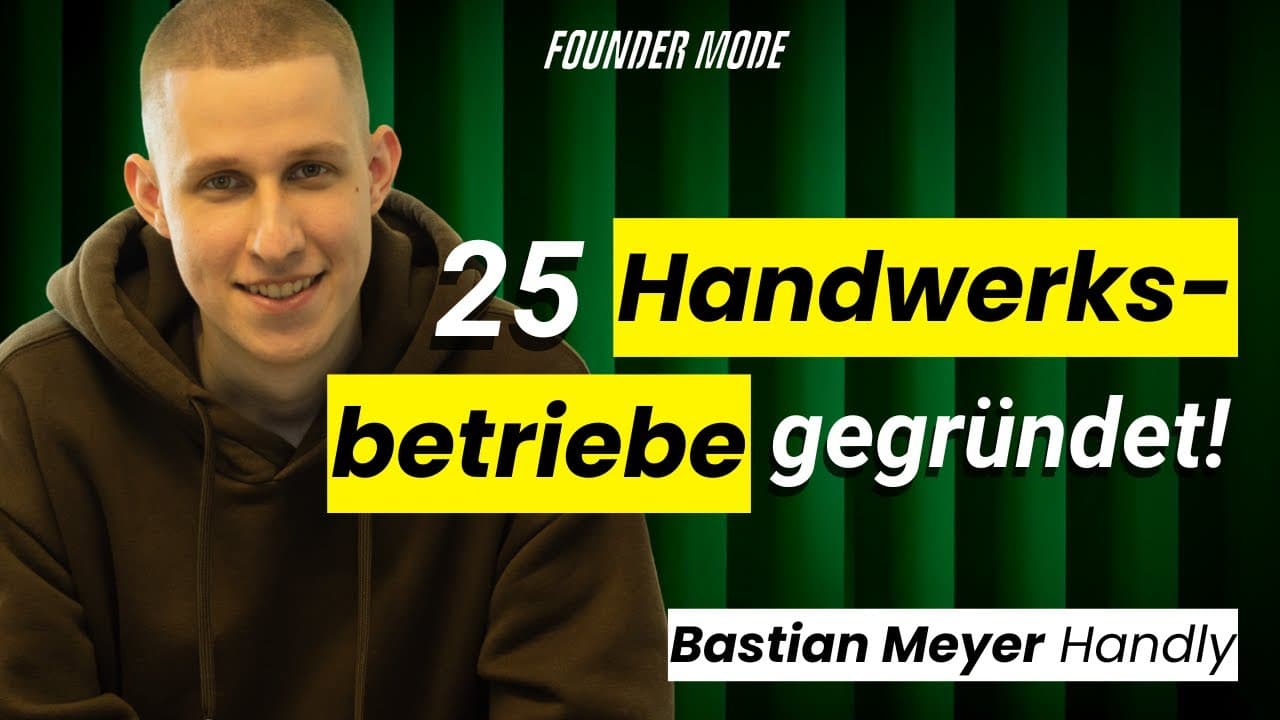
Bastian "Basti" Meyer grew up in a village in North Rhine-Westphalia on the edge of the Ruhr area, where almost every man in his family works in a trade; his father was a roofer. He got his first computer at eight, taught himself Java through Minecraft, and for the 2014 World Cup built a digital Panini sticker app that got 20,000 sign-ups in about two weeks. At CODE University in Berlin he started what is now Handly as a semester project in 2020: first software for tradespeople, now a business-in-a-box model that helps roofers set up new businesses in exchange for a revenue share. His first angel was wefox founder Julian Teicke; VCs such as 20VC and Stride joined later.
Episodes
Numbers from the episode
FAQ
What does Handly do?
Handly is a business-in-a-box startup from Berlin that helps tradespeople start and grow their own business, now focused on roofers. Handly handles bookkeeping, the website, customer acquisition and a standardised sales process and earns a revenue share in return. The business carries the owner's name and belongs 100 percent to them. To the episode →
Who has invested in Handly?
The first angel was wefox founder Julian Teicke, who according to Basti initially invested 250,000 euros for 20 percent and now sits on the board. The VCs 20VC and Stride joined later. During the 2023 crisis, angels including the founders of Bitpanda and a family office also invested. To the episode →
Quotes
„Also sie machen einfach mit dir mehr Geld, als sie ohne dich machen würden.““They simply make more money with you than they would without you.”
„Und wir glauben daran, dass wir nur gewinnen sollten, wenn du gewinnst.““And we believe we should only win when you win.”
„… jeder schreibt sich Customer Obsession auf die Fahne. Aber was bedeutet das dann am Ende des Tages, in dem, wie du als Firma arbeitest?““Everyone claims customer obsession. But what does that actually mean for how you work as a company?”
„Ich habe den Insolvenzantrag schon ausgefüllt gehabt.““I had already filled out the insolvency filing.”
„… dass es ein gutes Zeichen ist, wenn nicht jeder versteht, was du machst und nicht jeder gut findet, was du machst.““It's a good sign when not everyone understands what you're doing and not everyone likes it.”