From Franconia to New York: changing the world with a vision
with Albert Wenger, Partner at Union Square Ventures and author of “The World After Capital”
Summary
Albert Wenger is a Franconian from Oberasbach who grew up with an Apple II and a lot of freedom. An exchange year in Rochester, Minnesota, shows him the contrast between American optimism and German caution. He goes to Harvard because it is the only school offering him an affordable financial package, later starts a PhD at MIT, and in 1996 founds a company. His conclusion: founders need focus over a long period, investors mostly need curiosity. It takes another ten years before he lands at Union Square Ventures.
With Feliks and co-host Moritz Blees, Albert walks through the USV model: a team of around 20 people in total, thesis-driven investing, a target of 3x cash on cash per fund, and a flat carry with no deal attribution. He explains product-market fit with a bicycle: without PMF you pedal uphill, with PMF you roll downhill. Getting there takes both A/B testing and watching your customers.
Then come the big topics: climate funds with nuclear, battery and simulation companies, Web3 as the first technology for decentralised consensus, and a fundamental right to your own loyal AI. On AI, USV thinks in scenarios rather than one single thesis. In his book “The World After Capital”, Albert argues that capital is no longer scarce, but attention is.
Finally the three discuss universal basic income, which Albert is testing with his own pilot project in Hudson, Europe as a democratic third way between China and the US, and mindfulness: his phone is permanently on do not disturb, and he does breathing exercises every morning and evening.
Numbers from the episode
4 more numbers
What the conversation was mostly about
Chapters
- 00:00From Franconia to Harvard: Albert's first steps into techBackground
- 07:26The move into venture capital: why Albert is not a good founderBackground
- 10:04USV's strategy: thesis-driven investing and small fundsVenture capital
- 14:06Product-market fit: why PMF matters most for startupsProduct-market fit
- 20:52Climate tech: nuclear energy, simulations and new solutionsClimate, Web3 & AI
- 28:20Web3 & crypto: decentralised databases as a fundamental innovationClimate, Web3 & AI
- 36:45Artificial intelligence: scenarios, challenges and opportunitiesClimate, Web3 & AI
- 43:11The world after capital: why attention is the new currencySociety & the knowledge age
- 50:33Universal basic income: experiments and findingsSociety & the knowledge age
- 01:03:30Mindfulness & attention: how we win back our timeMindfulness & attention
Key learnings
- 1
You don't have to found a company to become an investor
Albert started a company at MIT in 1996 with two professors and mostly learned that he is not a good entrepreneur. Founders have to stay focused on the same problem for a long time and be good with people; investors above all need to be curious and want to understand new things. He thinks the common rule that you must found a company before you can invest is wrong.
- 2
Stay small and thesis-driven if you don't want to chase every hype
A very large fund has to be in almost every good deal to generate returns. USV doesn't want that pressure and only invests in what the team understands. The model: around two dozen investments per fund, one fund returner, three or four more deals that return the fund again, and 3x cash on cash in the end. Purely economically, bigger funds would be more rational because of the fees, but Albert wants the freedom to do what he believes in.
- 3
Share the carry equally so everyone pulls in the same direction
At USV every GP earns the same on every deal, no matter who found it or who looks after it. Analysts join for a limited time and therefore don't compete for an associate position, and all employees get a share of the carry. When something goes wrong, nobody says “I told you so”; the team solves the problem together.
- 4
Product-market fit is the only thing that really counts
Without PMF you're riding a bike uphill: as soon as you stop pedalling, you stop. With PMF you roll downhill and only have to make sure you don't go too fast. Then customers bring other customers, like at Etsy, where sellers moved over from eBay and took their buyers with them. According to Albert, Twitter was never well managed, but had so much PMF from day one that it couldn't be killed.
- 5
Track the numbers and watch your customers
You need the quantitative side with A/B tests and cohort retention, but it isn't enough. You also need to observe customers: people are bad at describing what they want but good at reacting to something they try. Albert recommends the book “Customers Included” by Mark Hurst. Successful companies master both, even though that's hard because it often takes different kinds of people.
- 6
Watch your fear and greed instead of reacting to every price move
How do you stick to a long-term thesis when a market like crypto keeps going up and down? Albert would advise his younger self to have a mindfulness practice. Then you can notice your own fear when the price drops and your greed when it rises, take a deep breath and focus on what you believe in for the long run.
- 7
When the future is unclear, think in scenarios and build a portfolio
On AI, USV openly says nobody knows what the future looks like. So the team thinks along two axes: how fast are we moving towards superintelligence, and how much power do a few models have? It invests in companies that can work in different scenarios, for example a geothermal company whose AI relies on non-public data from actual drilling. The climate portfolio is spread the same way: carbon drawdown, nuclear energy, batteries.
- 8
Protect your attention with a few fixed hacks
Albert's phone is permanently on do not disturb; only his wife and three children get through. On top of that he does conscious breathing exercises every morning and evening, eyes closed with a warm washcloth on them. Meditation, yoga and running didn't work for him. His argument: apps and feeds are optimised for our attention the way food is optimised with sugar, so you need personal discipline.
About the guest
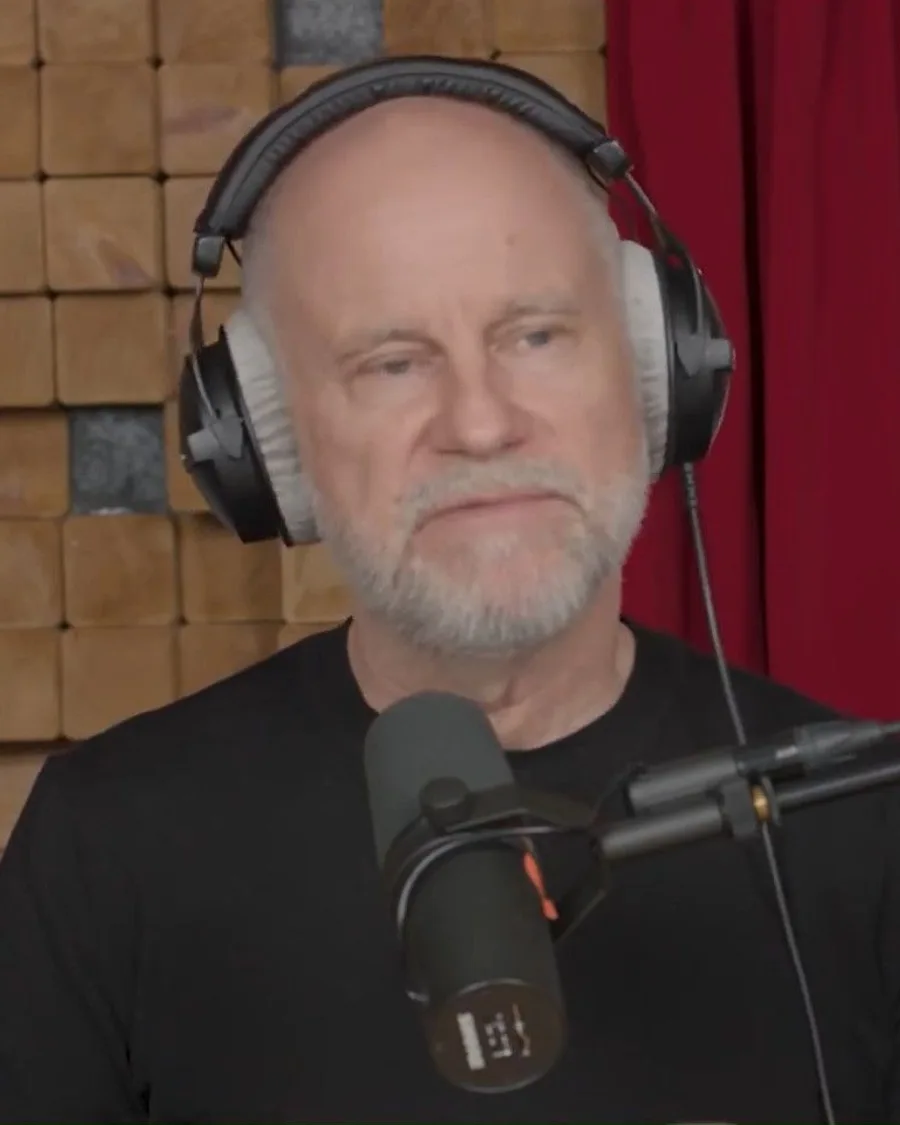
Albert Wenger
Albert Wenger grew up in Oberasbach near Nuremberg. His parents bought him an Apple II early on, and after a year in Rochester, Minnesota, he studied computer science and economics at Harvard. After a few years in management consulting he went to MIT for a PhD, realised there that he didn't want to become an academic, and in 1996 started a company with two professors. His main lesson from it: he is more of an investor than a founder. Today he is a partner at Union Square Ventures in New York, teaches a course on product-market fit at NYU, and writes about the transition to the knowledge age on his blog Continuations and in his book “The World After Capital”.
FAQ
Who is Albert Wenger?
Albert Wenger is a partner at Union Square Ventures in New York and author of “The World After Capital”. He comes from Oberasbach near Nuremberg, studied computer science and economics at Harvard, started a PhD at MIT and founded his own company in 1996 before moving into venture capital. He teaches a course on product-market fit at NYU and blogs at Continuations.
How does Union Square Ventures invest?
USV is thesis-driven and deliberately keeps its team and funds small; around 20 people work there in total. Per fund it makes around two dozen investments, targeting 3x cash on cash. Carry is flat with no deal attribution: every GP earns the same on every deal. Albert stresses, though, that other VC models can be successful too.
How do you recognise product-market fit?
Albert compares it to cycling: without PMF you pedal uphill, with PMF you roll downhill. You feel market pull, customers come on their own and partly market the product for you, like the sellers on Etsy. To get there you need numbers such as cohort retention as well as real customer observation.
What is “The World After Capital” about?
Albert describes the transition from the industrial age to the knowledge age. His thesis: markets have been so successful that capital is no longer scarce; attention is. He proposes three freedoms that reinforce each other: economic freedom through a universal basic income, informational freedom through your own loyal AI, and psychological freedom through mindfulness. He wrote the book publicly on GitHub and worked feedback into it.
What does Albert Wenger think of universal basic income?
He has supported it for many years and, with his wife, runs his own pilot project in the small town of Hudson: 128 people chosen by lottery receive 500 dollars a month for five years. According to Albert, the experiments show that people become physically and mentally healthier and often invest in their careers. He sees the real problem in the existing welfare system, which cuts benefits as soon as someone starts working.
Why does Albert Wenger still believe in Web3?
Because it rests on a fundamental innovation: Bitcoin was the first system able to reach consensus in a decentralised way, in other words a database nobody owns alone. Big platforms like Amazon or Facebook are, at their core, central databases. For decentralised systems to win, though, he thinks legal changes are needed, such as a right to access platforms programmatically with your own AI.
Mentioned in this episode
- Union Square VenturesCompanyAlbert's VC firm in New York, within sight of Union Square.
- EtsyCompanyEarly USV success: sellers moved over from eBay and brought their buyers.
- Twitter (X)CompanyAlbert: never well managed, but product-market fit from day one.
- Customers IncludedBookBook by Mark Hurst on customer observation that Albert recommends.
- RadiantCompanyPortfolio company building a compact reactor that fits into a shipping container.
- SimScaleCompanyMunich-based simulation platform that runs many physics solvers on one CAD model.
- TransmutexCompanyEuropean nuclear company in USV's climate portfolio, working on nuclear waste.
- FarcasterProductDecentralised social network USV has invested in.
- DuolingoCompanySuccessful USV investment from its “access to knowledge” thesis.
- BrilliantCompanySTEM learning platform in the portfolio that uses AI models to create content faster.
- GiveDirectlyCompanyOrganisation running a basic income pilot in Kenya that Albert supports.
- LumaToolFree invitation tool as an example of productivity that shows up in no statistics.
- Star TrekTV showTo Albert one of the most positive visions of the future, unlike later dystopias.
- Project EuropeCompanyFounder initiative backing the next generation, which Albert finds exciting.